


Can You Run a Game Server on a Cloud Server? A Detailed Explanation
Oct 27, 2026A Cloud Server is more than just a data storage solution. It can also be used to run games directly, host game servers, or support Cloud Gaming. Viettel IDC will help you understand the capabilities of Cloud Servers in the gaming industry and how to choose the right server configuration for your needs.
What Is a Cloud Server, and Why Is It Suitable for Gaming?
Before answering whether a Cloud Server can run a game server, it is important to understand what this type of server is. A Cloud Server is a virtual server created from a pool of physical servers in a data center. Resources such as CPU, RAM, storage, and bandwidth are allocated flexibly through a cloud computing platform. This allows users to upgrade or scale resources easily when needed without changing physical hardware.
Unlike traditional servers, Cloud Servers can maintain high availability and operational stability through redundancy mechanisms involving multiple physical servers. For online gaming systems, downtime can directly affect the player experience. For this reason, Cloud Servers are increasingly being adopted across the gaming industry.
Can You Run a Game Server on a Cloud Server?
Yes, Cloud Servers can be used to run game servers. Today, cloud servers are widely used for two main purposes: playing games directly through Cloud Gaming and hosting game servers.
Playing Games on a Cloud Server
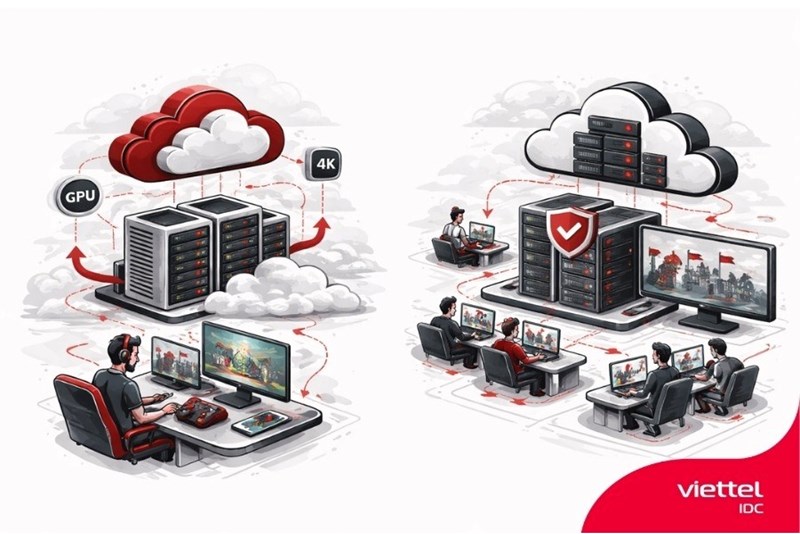
Cloud Gaming operates by processing game workloads centrally on remote servers. When players interact with a game on their devices, their control inputs are sent to the Cloud Server. The server processes the game's logic and graphics, then streams the resulting visuals back to the player's device as video.
This allows users to play hardware-intensive games without needing a high-performance personal computer or gaming device.
To ensure smooth Cloud Gaming performance, the most important factor is a stable, high-speed Internet connection. The server also needs sufficient computing power, particularly GPU resources, to process graphics. Network latency is another critical consideration, as high latency can cause delayed controls, stuttering, or lag during gameplay.
Using a Cloud Server to Host a Game Server
Beyond playing games directly, Cloud Servers are also widely used to host online gaming systems. Many game developers choose this solution because of its computing capabilities, high availability, and flexible scalability. Cloud Servers enable centralized game data management and support multiple concurrent players while maintaining consistent performance.
Recommended Cloud Server Configuration for Gaming
When evaluating whether a Cloud Server can run a game server, server configuration is a key factor in ensuring stable performance. The appropriate configuration depends on the game's scale, the number of concurrent players, and the intended use case.
- CPU: Consider 4–8 vCPUs for small servers and 8–16 vCPUs or more for larger player populations or multiplayer games.
- RAM: At least 8 GB for basic game servers; 16–32 GB may be more suitable for larger game servers or systems running multiple emulators.
- GPU: Required for GPU-accelerated Cloud Gaming and graphics-intensive workloads.
- Storage: SSD or NVMe storage with at least 100 GB of capacity is recommended to improve game data access speeds.
- Network bandwidth: A connection ranging from 100 Mbps to 1 Gbps is recommended, depending on the workload, to support stable connectivity and help minimize latency during online gaming.
These specifications are general starting points rather than universal requirements. Actual resource needs depend on the specific game, server software, number of concurrent users, and workload characteristics.
Important Considerations When Using a Cloud Server for Gaming
Although Cloud Servers offer many benefits for gaming infrastructure, users should consider several important factors to maintain stable performance and optimize costs. Choosing the right configuration, selecting a reputable provider, and managing resources efficiently can help gaming systems run effectively while minimizing operational risks.
- Choose an appropriate configuration: Select sufficient CPU, RAM, and storage resources to support the number of players and the type of game being hosted.
- Ensure stable network connectivity: The server should have adequate bandwidth and low latency to minimize lag when multiple players are connected simultaneously.
- Calculate operating costs: Cloud Server services are often billed according to allocated resources or usage, depending on the pricing model. Choose a configuration that meets performance requirements while staying within budget.
- Choose a reputable provider: Look for providers with reliable data center infrastructure and consistent technical support.
- Implement security measures: Configure firewalls, deploy DDoS protection, and back up data to safeguard the gaming system.
Conclusion
As explained above, the answer to whether you can run a game server on a Cloud Server is a clear yes. Cloud Servers can host game servers and also support direct gameplay through Cloud Gaming technology.
If you are looking for a reliable server platform to host game servers or deploy Cloud Gaming systems, Viettel Cloud Server is an option worth considering in Vietnam. Its infrastructure is built on internationally certified data centers and offers high-speed connectivity, low-latency networking, and flexible resource scaling.
These capabilities can help gaming systems operate reliably, reduce lag, and deliver a smoother gaming experience.
Learn more about the service: Viettel IDC Cloud Server
For consultation and more information about Viettel IDC's services, please contact the company through the following channels:
- Hotline: 1800 8088 (toll-free)
- Fanpage: https://www.facebook.com/viettelidc
- Website: https://viettelidc.com.vn
Related news
When Should You Scale Up vs. Scale Out? A Guide to Choosing the Most Effective Approach
As IT systems evolve, particularly websites, web applications, and digital service platforms, scaling resources becomes almost inevitable. However, deciding how to scale is a challenge that leaves many businesses and technical teams uncertain.
Do You Need DevOps to Operate a Cloud Server? Insights from Real-World Implementations
In recent years, Cloud Server has become a popular infrastructure platform for almost every type of IT system, ranging from small business websites to large-scale applications. However, alongside the flexibility and scalability of cloud computing comes increasing operational complexity. Many organizations are asking: Do you need DevOps to operate a Cloud Server, or is a traditional IT team sufficient?
Can You Recover Data That Has Been Accidentally Deleted from the Cloud?
Can you recover data that has been accidentally deleted from the cloud? This is a common question among users today. Cloud storage services such as Dropbox, Google Drive, and Microsoft OneDrive all incorporate data protection mechanisms that temporarily retain deleted files for a certain period.
How Do Cloud Providers Protect User Data?
In the era of digital transformation, how cloud providers protect user data has become a major concern for both businesses and individuals. As more data is stored on cloud computing platforms, cloud providers must implement multiple layers of sophisticated security measures to ensure that data remains safe from cyberattacks, data breaches, and infrastructure failures.
Is Cloud Server Suitable for Hosting a WordPress Website? A Detailed Explanation
WordPress is a popular website-building platform, but running a website reliably requires sufficiently powerful and flexible server infrastructure. This is why many businesses ask whether Cloud Server is suitable for hosting a WordPress website when choosing a hosting environment.
How to Improve Cloud Server Performance: Best Optimization Tips
How to improve Cloud Server performance is a common question among businesses running websites or applications on cloud computing platforms. If a server runs slowly or processes data inefficiently, the system may experience performance issues that affect speed and user experience.
What Is the Difference Between Cloud Storage and Cloud Server? A Detailed Comparison
What is the difference between Cloud Storage and Cloud Server? This is a common question among businesses starting to use cloud computing services. Although both are part of the cloud ecosystem, Cloud Storage and Cloud Server serve different purposes and functions in data storage and IT system operations.
What Is an Image Server? How It Works and Its Role in Website Infrastructure
An image server is a server specifically designed to store, process, and deliver images for websites or applications. By using dedicated image processing and delivery mechanisms, an image server helps improve page load speeds, reduce the workload on the main server, and enhance the user experience when accessing a system.
Can Data Be Exposed When Using a Cloud Server? A Detailed Explanation
Can data be exposed when using a Cloud Server? In practice, data can still be exposed if the system is misconfigured or has weak security. However, these risks can be effectively managed by choosing a reputable cloud service provider and implementing appropriate security measures.
Comment ()