


What Is an Image Server? How It Works and Its Role in Website Infrastructure
Oct 27, 2026An image server is a server specifically designed to store, process, and deliver images for websites or applications. By using dedicated image processing and delivery mechanisms, an image server helps improve page load speeds, reduce the workload on the main server, and enhance the user experience when accessing a system. In this article, Viettel IDC explores what an image server is and how it works.
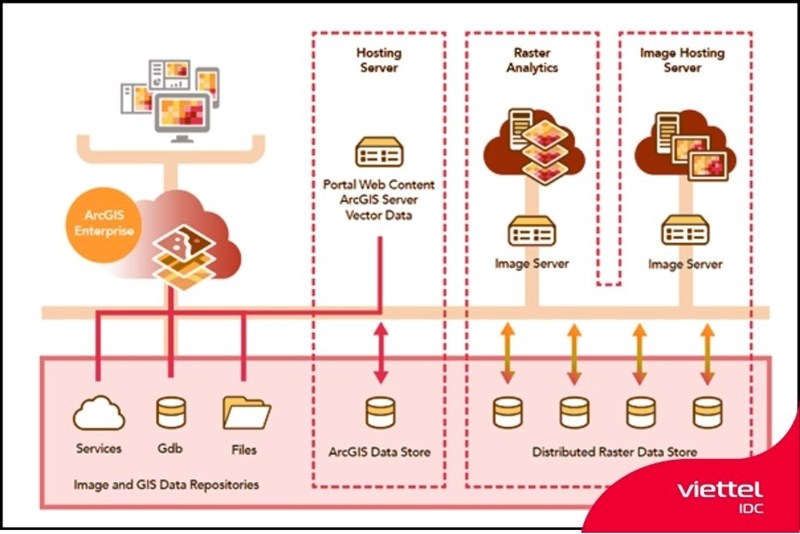
What Is an Image Server?
An image server is a type of server specifically designed to store, manage, and deliver images for websites or applications. Instead of storing all images directly on the main web server, an image server handles image files separately, including product photos, banners, avatars, and other media content.
In many large-scale systems, images account for a significant proportion of total data storage and bandwidth consumption. If all image requests are handled by the main web server, the system may become overloaded as traffic increases. An image server addresses this issue by separating image storage and delivery from the main web infrastructure and assigning these tasks to a dedicated system.
How Does an Image Server Work?
An image server operates on the principle of separating image processing and delivery from the main web server. When a user visits a website, the browser sends requests to retrieve the necessary resources, such as HTML, CSS, JavaScript, and images.
When an image server is used, image requests are directed to the dedicated image server rather than the main web server. The image server processes each request, retrieves the image from the storage system, and delivers it to the user.
The process typically involves the following steps:
- The user visits a website and opens a page containing images.
- The browser sends a request to the image server to retrieve an image file.
- The image server retrieves the image from the storage system or cache.
- The image is optimized and delivered to the user's browser.
Benefits of Using an Image Server
Deploying an image server offers several important benefits for website infrastructure, particularly for platforms with high traffic volumes or large amounts of media content.
Improved Page Load Speeds
One of the main benefits of an image server is improved page load speed. When images are served from a dedicated server or a Content Delivery Network (CDN), they can be delivered to users more quickly.
In addition, image servers often support optimization techniques such as image compression and lazy loading. These techniques reduce image file sizes and help content render faster in web browsers.
Reduced Workload on the Web Server
If the web server must handle both application logic and image delivery, it can quickly become overloaded as traffic increases. An image server helps separate image delivery into an independent system.
As a result, the web server can focus on processing application data and user requests, while the image server handles the substantial bandwidth demands associated with media delivery.
Improved Scalability
An image server makes it easier to scale a system as the volume of image data grows. Businesses can add more image servers or integrate their infrastructure with a CDN to serve users worldwide.
This scalability is particularly important for e-commerce platforms, social networks, and websites containing large amounts of content.
Automatic Image Optimization
Some modern image servers can automatically process images before delivering them to users. For example, the system can resize images to match screen dimensions or convert them to formats such as WebP to reduce file sizes.
Common Image Server Technologies
Several technologies and solutions are currently used to build image server infrastructure for websites and applications.
Nginx Image Server
Nginx is commonly used as an image server due to its high performance and ability to handle multiple requests simultaneously. It can be configured to serve static images quickly while consuming relatively few system resources.
In addition, Nginx supports caching and integrates well with CDN platforms to optimize image delivery performance.
CDN-Based Image Delivery
A Content Delivery Network (CDN) is one of the most widely used solutions for image delivery. A CDN distributes images through multiple servers located in different geographic regions. When users access a website, images can be delivered from a nearby server, reducing latency and improving page load speeds.
Object Storage for Image Delivery
Some systems use object storage solutions, such as Amazon S3 or cloud storage platforms, to store images. The image server retrieves data from the storage system and delivers it to users.
This architecture enables businesses to store large volumes of data cost-effectively while making it easier to scale storage capacity as their systems grow.
When Should You Use an Image Server?
Not every website needs a dedicated image server from the outset. For smaller systems, storing images directly on the web server may be sufficient for day-to-day operations. However, as a website grows and its image data increases, an image server can help optimize performance and reduce the workload on the overall system.
The following are some common scenarios in which deploying an image server is beneficial.
- Websites with large numbers of images: E-commerce websites and content platforms often contain thousands of product images or article illustrations. An image server helps manage and deliver these images more efficiently.
- Websites with high traffic volumes: As traffic increases, an image server reduces the workload on the web server by handling image requests separately.
- Systems that need to scale: Deploying an image server makes the system architecture more flexible and simplifies scaling as data volumes or user numbers grow.
- Mobile applications and social networks: Content-sharing applications and social networks often require image servers to process and deliver large volumes of images quickly and reliably.
Conclusion
Understanding what an image server is helps businesses design more efficient system architectures when developing websites or applications with substantial media content. An image server does more than store and deliver images: it also helps improve page load speeds, reduce the workload on the web server, and enhance the user experience.
For websites or applications that require an image server, choosing reliable and flexible server infrastructure is essential. Viettel IDC provides Cloud Server services built on modern cloud infrastructure and internationally certified data centers in Vietnam.
Learn more about Viettel IDC's Cloud Server services:
https://viettelidc.com.vn/en/cloud-server
For consultation and more information about Viettel IDC's services, please contact the company through the following channels:
- Hotline: 1800 8088 (toll-free)
- Fanpage: https://www.facebook.com/viettelidc
- Website: https://viettelidc.com.vn
Related news
When Should You Scale Up vs. Scale Out? A Guide to Choosing the Most Effective Approach
As IT systems evolve, particularly websites, web applications, and digital service platforms, scaling resources becomes almost inevitable. However, deciding how to scale is a challenge that leaves many businesses and technical teams uncertain.
Do You Need DevOps to Operate a Cloud Server? Insights from Real-World Implementations
In recent years, Cloud Server has become a popular infrastructure platform for almost every type of IT system, ranging from small business websites to large-scale applications. However, alongside the flexibility and scalability of cloud computing comes increasing operational complexity. Many organizations are asking: Do you need DevOps to operate a Cloud Server, or is a traditional IT team sufficient?
Can You Recover Data That Has Been Accidentally Deleted from the Cloud?
Can you recover data that has been accidentally deleted from the cloud? This is a common question among users today. Cloud storage services such as Dropbox, Google Drive, and Microsoft OneDrive all incorporate data protection mechanisms that temporarily retain deleted files for a certain period.
How Do Cloud Providers Protect User Data?
In the era of digital transformation, how cloud providers protect user data has become a major concern for both businesses and individuals. As more data is stored on cloud computing platforms, cloud providers must implement multiple layers of sophisticated security measures to ensure that data remains safe from cyberattacks, data breaches, and infrastructure failures.
Can You Run a Game Server on a Cloud Server? A Detailed Explanation
A Cloud Server is more than just a data storage solution. It can also be used to run games directly, host game servers, or support Cloud Gaming. Viettel IDC will help you understand the capabilities of Cloud Servers in the gaming industry and how to choose the right server configuration for your needs.
Is Cloud Server Suitable for Hosting a WordPress Website? A Detailed Explanation
WordPress is a popular website-building platform, but running a website reliably requires sufficiently powerful and flexible server infrastructure. This is why many businesses ask whether Cloud Server is suitable for hosting a WordPress website when choosing a hosting environment.
How to Improve Cloud Server Performance: Best Optimization Tips
How to improve Cloud Server performance is a common question among businesses running websites or applications on cloud computing platforms. If a server runs slowly or processes data inefficiently, the system may experience performance issues that affect speed and user experience.
What Is the Difference Between Cloud Storage and Cloud Server? A Detailed Comparison
What is the difference between Cloud Storage and Cloud Server? This is a common question among businesses starting to use cloud computing services. Although both are part of the cloud ecosystem, Cloud Storage and Cloud Server serve different purposes and functions in data storage and IT system operations.
Can Data Be Exposed When Using a Cloud Server? A Detailed Explanation
Can data be exposed when using a Cloud Server? In practice, data can still be exposed if the system is misconfigured or has weak security. However, these risks can be effectively managed by choosing a reputable cloud service provider and implementing appropriate security measures.
Comment ()